June 5, 2026 · 4 min read
Why Children Color Better When They Care About the Story
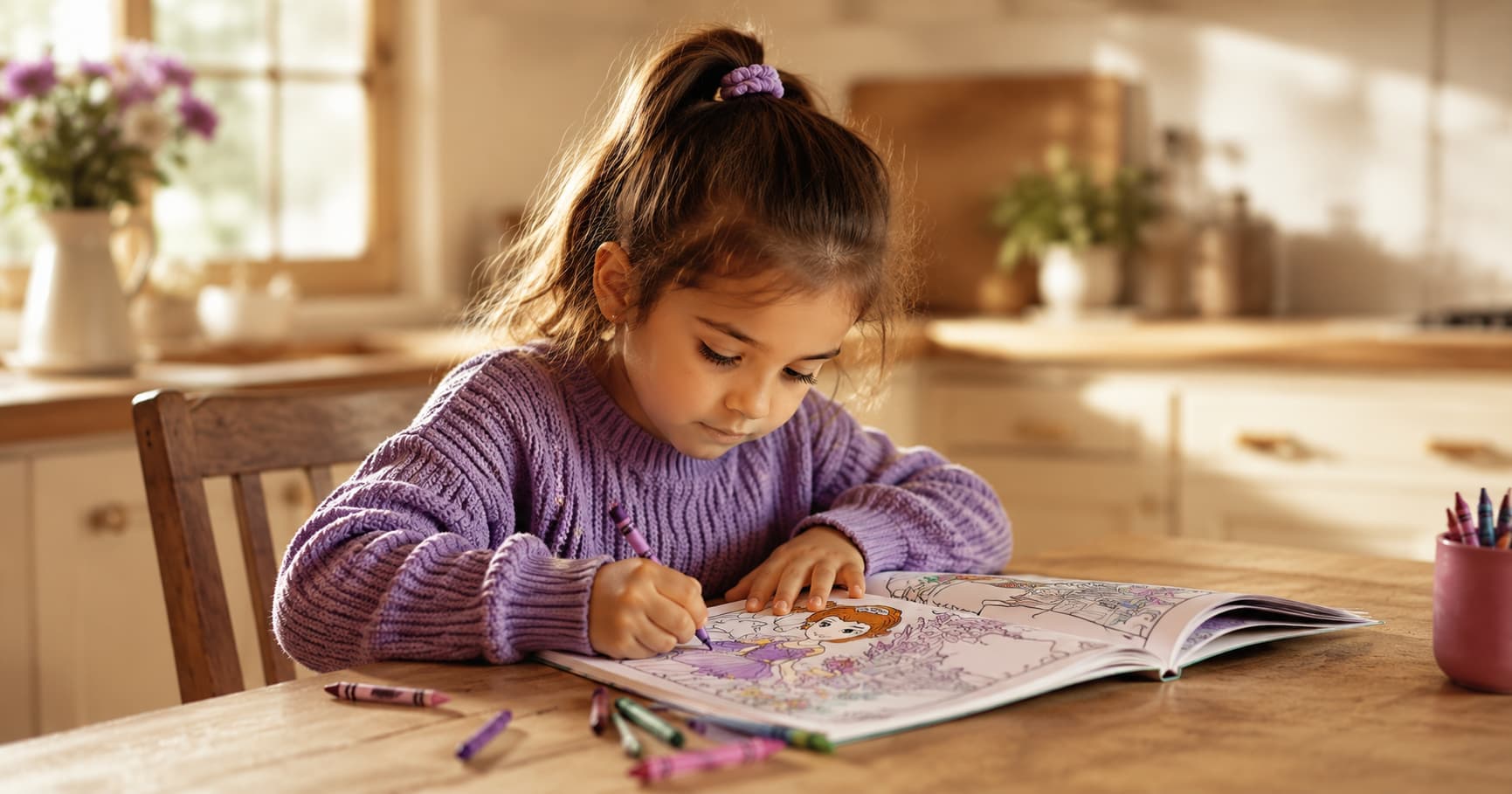
Every parent who has handed a child a coloring book knows how it can go. Five enthusiastic minutes on the first page. A slower start on the second. By the third, they are somewhere else entirely.
It is easy to assume this is just how coloring goes for young children, that attention is short and the activity has a natural ceiling. But spend time watching children color something they helped create, a character they named, a scene built from a story they told, and the picture changes. The same child who abandoned a generic dinosaur page at minute four will color a page featuring their own dog going on an adventure for forty-five minutes without a reminder.
The difference is not attention span. It is investment in the outcome.
What story does for a coloring session
A coloring page on its own asks a child to fill in outlines. That is a fine thing. But a coloring page from a story the child already knows, one where they understand who the character is and what happens next, asks something richer: to bring the world to life.
Those are different activities. The first is a task. The second is a continuation of something the child cares about. The crayon becomes a way of finishing the story, not a way of filling the time.
This shows up in how children handle choices. When the story is unfamiliar, color choices are random. When the story is theirs, choices become deliberate. Is the dragon gold or green? It depends: what color did we say she was? What color should the forest be at night in this part of the story? These are real questions with answers the child is motivated to work out.
The pull to turn the page
Generic coloring books are designed so that each page is self-contained. That is their strength and their weakness. There is no reason to finish one page before starting the next, and no particular reason to reach the end of the book at all.
A story-driven coloring book pulls differently. A child who is partway through a narrative wants to know what comes next. They finish the current page because the next page is the continuation. The coloring session becomes a reading session in reverse: they already know the story, and they are illustrating it as they go.
This is why a personalized coloring book, one where the story was described by a parent and built around a specific child, tends to produce much longer coloring sessions than a book chosen off a shelf. The child is not coloring a stranger's dragon. They are coloring their dragon.
What this looks like in practice
Before starting a coloring session, try narrating the page. Not reading instructions, but telling the story of what is about to happen. "This is the page where Mia finds the door in the tree. What color do you think the door should be? What do you think is inside?"
Two minutes of story setup before the crayons come out changes the quality of everything that follows. The child sits down already engaged, already with opinions about how the page should look.
The same principle works with any theme a child loves. Space, animals, dragons, football: what matters is not the subject but the level of personal connection. A child who helped describe the story, who knows the character's name and what they are trying to do, is a child who cares how the page turns out.
The coloring session as creative act
There is a version of coloring that is mostly about staying within the lines. And there is a version that is genuinely creative: the child is making decisions that matter, producing a result that is uniquely theirs, and finishing something that feels worth finishing.
Narrative investment is what creates the second version. It turns a motor-skill exercise into a creative act. The child who finishes a story they care about, page by page, with their own color choices, has made something. That is a different kind of satisfaction from completing a task.
It is also, practically speaking, forty-five minutes of calm, focused, screen-free time. Which is not nothing.
Frequently asked questions
Why do children lose interest in coloring books quickly?
Generic coloring books ask a child to color a scene they have no connection to. When the story and characters feel random, there is no pull to turn the page or finish the session. Interest in the activity depends on investment in what is being colored.
How do I make coloring more engaging for my child?
Start with a story your child cares about. Ask them to describe a character, a setting, or an adventure before they start coloring. When the pages show something they imagined, the coloring becomes a way of finishing the story rather than just filling in outlines.
Does personalization really make a difference to how long children color?
Consistently, yes. A child coloring a story about themselves, their pet, or their favorite theme will typically stay engaged two to three times longer than with a page chosen at random. The investment in the outcome is the difference.
At what age do children engage with stories while coloring?
From around age 3, children respond to narrative context. Even toddlers color more carefully when a parent explains what is happening on the page. The connection between story and engagement is present long before children can read the text themselves.
Share this article
Ready to make your first story?
Free to try. Your first story is ready in under a minute.