April 15, 2026 · 5 min read
The Quiet Benefits of Coloring for Children
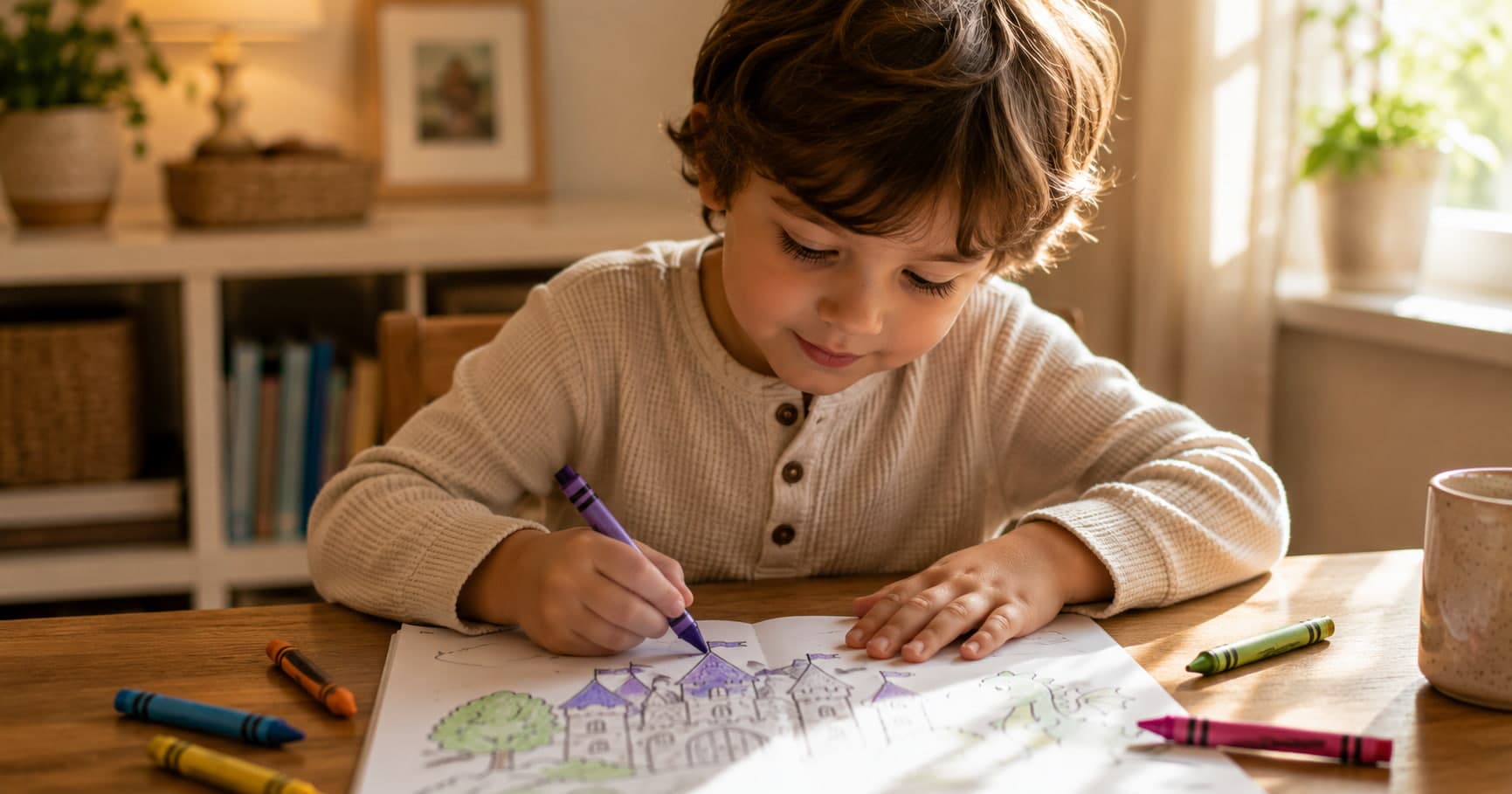
Coloring is one of those activities that looks simple from the outside and turns out to be quite rich on the inside. Children who color regularly are building more than a collection of finished pages.
Fine motor skills
Holding a crayon, staying within outlines, and varying pressure are all exercises in fine motor control. These are the same skills children use for writing, cutting, and eventually typing. Coloring provides a low-pressure, enjoyable way to practice them.
For younger children, especially ages 3 to 5, thick outlines and large open shapes make the activity accessible before fine motor skills are fully developed. As children grow, they naturally gravitate toward more detailed pages.
Focus and patience
Finishing a coloring page takes time. Not a lot of time, but enough that a child has to stay with a task and see it through. In a world of short clips and instant feedback, this is a quietly valuable thing to practice.
Many parents notice that children who color regularly are calmer and more able to concentrate on other tasks. The act of sitting down with crayons and a page seems to settle something.
Creative confidence
A coloring page provides structure (the outlines are drawn) but all the color choices belong to the child. Which crayon? How dark? Do they want to mix two colors on the same area? These are real decisions with visible consequences, and making them builds creative confidence.
Children who are told "there are no wrong colors" and mean it, who are free to make the sky purple if they want, develop a healthier relationship with creative work.
Screen-free together time
Perhaps the simplest benefit: coloring together is a genuinely pleasant way to spend time. A parent can sit beside a child, color their own page, and just be present. No devices, no tasks: just the quiet sound of crayons on paper and a conversation that goes wherever it goes.
These are small moments. But they add up to something.
If you want to read further, the American Occupational Therapy Association has useful guidance on fine motor development in children, and the CDC's developmental milestones pages offer a clear picture of what to expect at each age when it comes to drawing and coloring skills.
Frequently asked questions
At what age can children start coloring?
Children can start holding chunky crayons as young as 2–3 years. The best coloring pages for this age use very thick outlines and large, simple shapes. By age 4–5, most children can begin staying meaningfully within lines.
How long should a child spend coloring?
There is no fixed rule. Most children naturally limit their own sessions. 20–45 minutes is common for ages 5–9. The activity is calm and low-stimulation, so there is no harm in longer sessions.
Is coloring a good screen-free activity for children?
It is one of the best. Coloring is absorbing without being overstimulating in the way screens are. Many parents find that time spent coloring leads to a calmer, more settled child afterward.
Does coloring actually improve fine motor skills?
Yes. Holding a crayon, varying pressure, and staying within outlines are exercises in fine motor control: the same skills needed for writing, cutting, and other precise hand tasks.
Share this article
Ready to make your first story?
Free to try. Your first story is ready in under a minute.