May 21, 2026 · 5 min read
Screen-Free Summer Activities to Keep Kids Busy and Happy
Every June, the same thing happens. School ends on a Friday. By Monday, the screens are on at 7am and everyone feels vaguely bad about it.
This isn't really about screens. It's about what fills the gap when the structure of school disappears. Children who have things to do don't reach for a device. The challenge isn't willpower. It's having genuine alternatives that actually hold attention for more than five minutes.
Here are the activities that consistently work: ones that absorb children for real stretches of time, don't require constant adult supervision, and leave children calmer and more satisfied than passive screen time does.
For ages 3–5
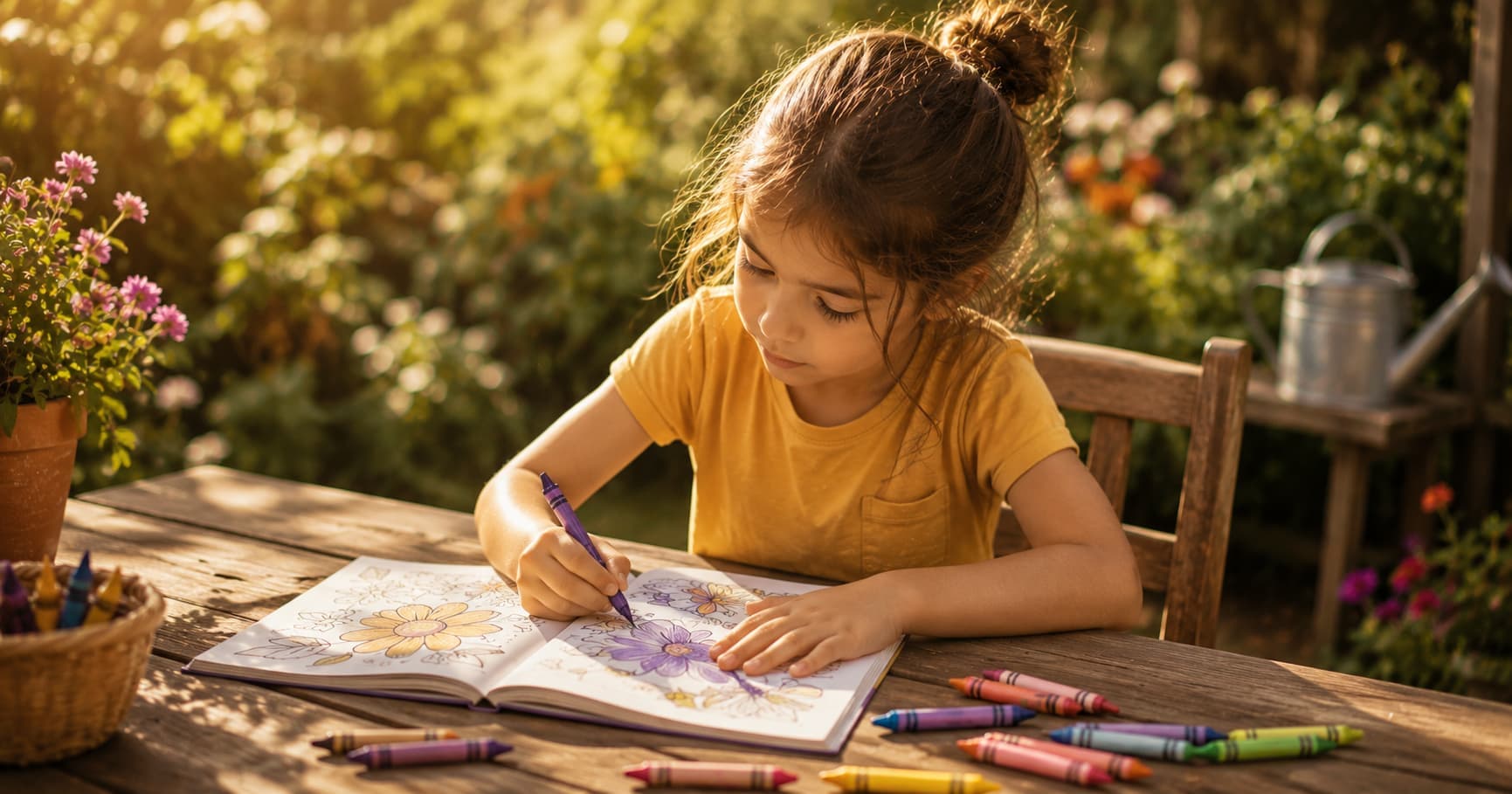
- Personalized coloring books. A coloring book built around your child's favourite character, one they helped invent, holds attention in a way generic coloring pages don't. Fabelyn generates personalized coloring books in about a minute; print a stack at the start of summer and bring one out each week.
- Sensory bins. A container filled with rice, dried pasta, or kinetic sand with small toys buried inside. Children explore independently for 30–45 minutes.
- Sticker scenes. Blank paper and a sheet of stickers. Children create scenes, narrate stories, and stick things in unexpected places. Simple, absorbing, and the result goes on the fridge.
- Painting with water. Paintbrushes and a bowl of water on a sunny patio. Children paint the fence, the ground, their shoes. It dries and they do it again.
For ages 6–8
- Chapter-by-chapter coloring. Give them a longer coloring book and treat each session as a chapter, two pages per sitting. Creates a project with a sense of progress and completion.
- Lego with a brief. Rather than free building, give a specific challenge. "Build the tallest thing that doesn't fall." "Build a vehicle that can only go backwards." Constraints make it more absorbing than open play.
- Nature journals. A blank notebook, colored pencils, and ten minutes outside each morning. Draw one thing they noticed. No rules about quality or detail.
- Cooking a real thing. Not helping, but actually making something. Scrambled eggs, a smoothie, a sandwich of their own design. The pride of a finished product they produced themselves is entirely real.
For ages 9–12
- Detailed coloring projects. At this age, coloring is a genuine artistic activity. Rich scenes with intricate patterns can keep a child absorbed for 90 minutes. Pair it with an audiobook or music for sustained, calm engagement.
- Writing and illustrating their own book. Blank paper folded into pages, no rules. Some children produce five pages, some produce fifty. Either is fine.
- Photography projects. A phone camera and a brief: photograph ten things that are the same colour. Or: photograph the same corner of the garden every day for a month. Looking at the world differently is a skill worth developing.
- Learning something with a product. Origami, friendship bracelets, basic knitting: crafts where skill builds session by session and produces something real you can hold.
The one thing that makes any activity stick
The activities that genuinely hold children's attention share one quality: they produce something. A finished coloring page, a Lego build, a nature journal entry, a plate of scrambled eggs. Children are motivated by completion in a way that passive consumption never provides.
The alternative to screen time isn't making things harder. It's making the reward just as real. A child who finishes coloring a page they helped design feels the same satisfaction as a child who finishes a level. The difference is what they have to show for it.
Frequently asked questions
How do I stop my child reaching for a screen first thing in the morning?
Have something ready before they wake up. A coloring book left on the kitchen table, a puzzle already out, an activity bag waiting. The ten seconds of friction at the start is often what sends children to a screen instead.
What screen-free activities work for mixed ages?
Activities with flexible levels of engagement work best: audiobooks (everyone half-listens while doing their own thing), coloring (each child at their own pace), card games, and baking all work across ages without requiring the same level from every child.
How long should children spend on screen-free activities per day?
There is no fixed rule, and an all-or-nothing approach rarely works. Having two or three reliable screen-free activities that genuinely hold attention tends to reduce overall screen time more effectively than a strict daily limit.
Are coloring books a good screen-free activity for older children?
Yes, especially for ages 9–12. Rich, detailed scenes take real time and skill to color. A session can last 60–90 minutes. Pairing coloring with an audiobook or podcast gives older children something for both hands and ears simultaneously.
Share this article
Ready to make your first story?
Free to try. Your first story is ready in under a minute.