April 1, 2026 · 3 min read
How to Choose the Right Coloring Pages for Your Child's Age
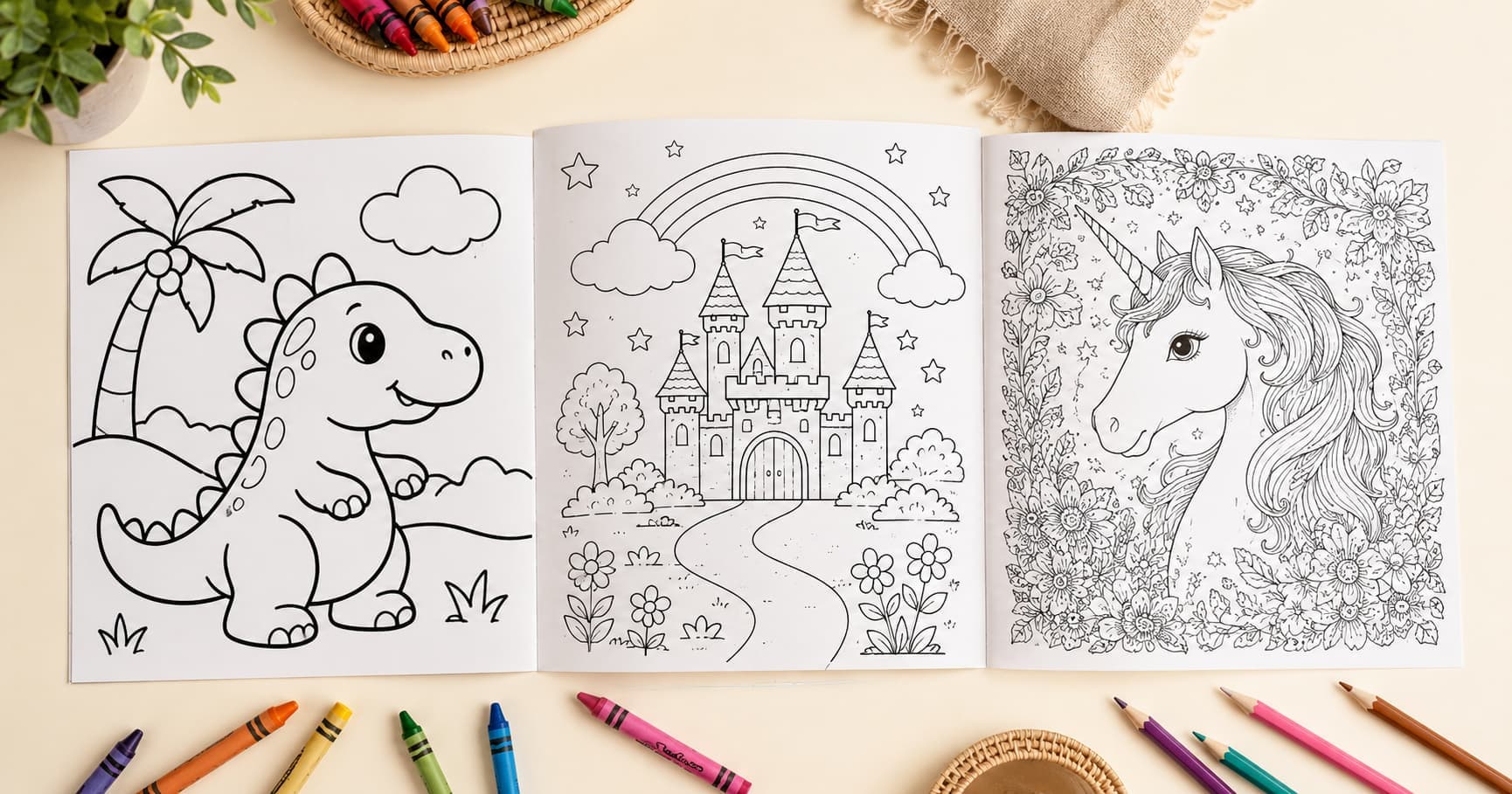
Not all coloring pages are created equal. A page that delights a nine-year-old will frustrate a four-year-old, and a page designed for toddlers will bore an older child in minutes. Getting the level right makes the difference between an activity children want to do and one they abandon.
Ages 3–5: thick outlines, big shapes
At this age, fine motor control is still developing. Children hold crayons with their whole fist, and staying within a line is genuinely difficult. The CDC developmental milestones guidelines give a useful picture of what to expect from children at each age when it comes to drawing and coloring. The best pages for this age group have:
- Very thick black outlines, 5pt or heavier
- Large, open regions with no small fiddly areas
- Simple, rounded shapes with no sharp angles or tight corners
- Just 3 to 4 main elements per page, so the composition feels manageable
The goal at this age is to finish a page and feel proud. Complexity is the enemy of that.
Ages 6–8: more detail, still accessible
By this age, children have better pencil grip and can stay within smaller outlines. They enjoy pages that offer more to color and more to discover. Look for:
- Medium-weight outlines, 3 to 4pt
- 5 to 7 elements per scene
- Some background detail: trees, ground, sky
- Characters with expressions and clothing details
Ages 9–12: rich scenes, intricate patterns
Older children are often genuinely skilled colorists. They enjoy complexity, shading experiments, and pages that take real time to complete. Pages for this age can include:
- Standard outlines, 2 to 3pt
- Up to 12 or more distinct elements
- Intricate background patterns, textures, and fine details
- Multiple characters in detailed environments
When in doubt, err on the side of simpler. A child who finishes a page and wants another is having a better time than a child who gives up halfway through.
Frequently asked questions
What coloring pages are best for a 4-year-old?
Very thick outlines (5pt or heavier), large open regions, simple rounded shapes, and no more than 3–4 main elements per page. The goal is for the child to finish a page and feel proud. Complexity is the enemy of that.
When do children develop enough fine motor control for detailed coloring pages?
Most children can manage moderate detail by age 6–7. Fine, intricate details are better suited to ages 9 and up. The CDC developmental milestones guidelines offer a clear picture of what to expect at each age.
How do I know if a coloring page is too hard for my child?
If your child gives up before finishing, or is frustrated rather than absorbed, the page is likely too complex. Err on the side of simpler: a child who finishes and wants another is having a better experience.
Can the same coloring book work for different-aged siblings?
Not ideally. What engages a 9-year-old will frustrate a 4-year-old. With Fabelyn, you can create separate books at different age levels, each matched to that child's current stage.
Share this article
Ready to make your first story?
Free to try. Your first story is ready in under a minute.